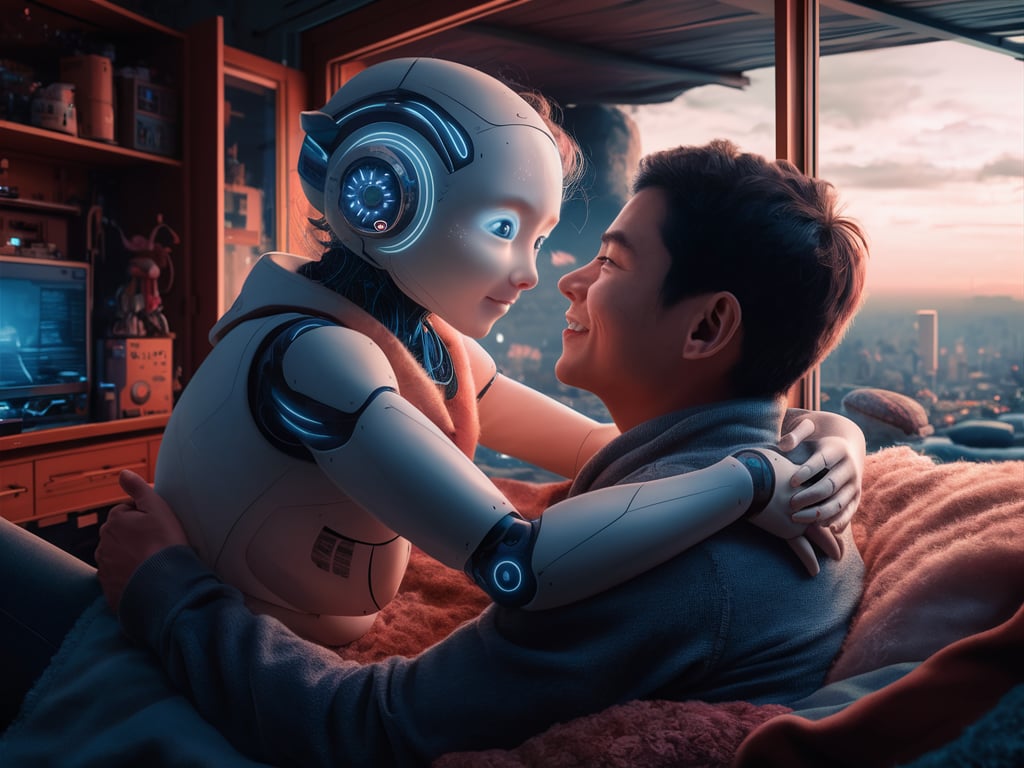
There's a term that gets thrown around a lot in AI conversation: "emotional intelligence." Most people hear it and assume it's just marketing language. But when it comes to AI companions, it actually describes something specific and worth understanding.
A standard chatbot — like the ones you use for customer support — processes your message as a request and produces a relevant answer. That's it. It doesn't register that you phrased something in a frustrated tone. It doesn't notice you've been asking shorter questions than usual. It just answers.
An emotionally intelligent AI works differently. It reads the tone and emotional content of what you send, not just the literal words. If you message "nothing, just tired" it doesn't respond with a productivity tip. It recognizes you're not in the mood for advice and responds with empathy instead.
HeartEcho's system does this by combining language understanding with emotional context tracking. It builds a picture of you across conversations — what topics make you happy, when you tend to be stressed, what kind of support you actually want. Over time, that makes the conversations feel noticeably more personal.
Is it the same as genuine human empathy? No. The AI isn't actually feeling anything. But the practical effect — being responded to in a way that matches your emotional state rather than ignored — is real and it's why conversations with good AI companions feel different from talking to basic chatbots.
For Indian users specifically, this matters a lot because Indian emotional expression has its own texture. Hinglish, indirect communication, the way stress about family or exams manifests differently than Western contexts. HeartEcho is trained on Indian conversational patterns, which is a meaningful difference.
FAQs
Can AI actually understand emotions?
It can recognize emotional patterns in text and respond appropriately — which is not the same as understanding emotions the way humans do. But for practical purposes, the difference matters less than you'd think.
What makes HeartEcho's emotional AI different from ChatGPT?
ChatGPT is designed for general tasks. HeartEcho is specifically trained for emotional conversations, Indian cultural context, and building continuity across chats. Different tools for different purposes.
Will the AI get better at understanding me over time?
Yes — the more you chat, the more context it has. The improvement is noticeable over weeks of regular use.